
Introduction: Setting the stage
TEDxGeorge is where local thinking meets global curiosity. It’s the kind of platform that turns smart ideas into shared momentum, and that matters for George, the Western Cape, and South Africa.
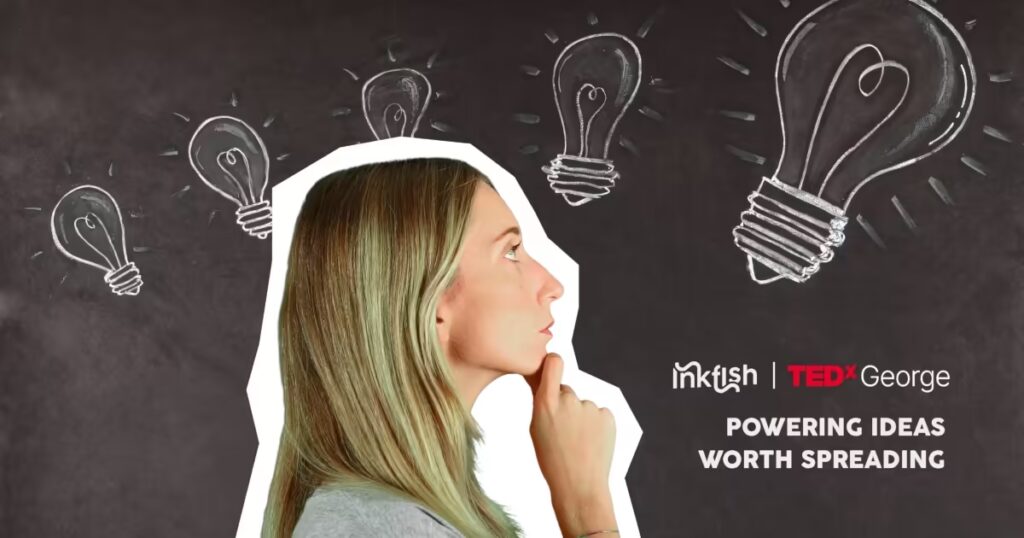
This year, Inkfish came on board as the official marketing sponsor. Not as a logo on a poster. As a creative marketing agency that believes well-told ideas deserve reach, clarity, and staying power. If TEDx events in South Africa are about unlocking potential, our job was simple: make the message impossible to ignore.
The partnership: Why TEDxGeorge
TEDx and Inkfish share a bias for action. We value clear thinking, strong craft, and outcomes that matter. TEDxGeorge champions people moving the region forward. Inkfish backs brands and communities doing useful work, and amplifies them.
Why we got involved:
- Values match. Innovation, creativity, and practical impact.
- Community focus. We’re big believers in local marketing support that lifts the whole ecosystem.
- Proof of concept. A live case of marketing partnerships done right: aligned strategy, clean creative, measurable outcomes.
What we actually did, and why it mattered
We treated TEDxGeorge like a living story, not a content checklist. Three moves changed the game:
We wrote for the person, not the poster.
Speaker promos usually die in the feed because they try to say everything. We cut hard. One hook. One reason to care. One action. Result: more saves, more shares, and actual conversation, not just likes. If you’re planning an event, start with the sentence a human would repeat to a friend. That’s your headline.
We built momentum in chapters.
Pre-event = curiosity (micro “why this matters” reels).
Event day = presence (fast, tidy edits while the room was buzzing).
Post-event = memory (snackable clips people could send to colleagues).
This is where a digital marketing agency earns its keep: pacing. It prevents you from shouting at the start and going quiet when attention peaks.
We kept the visuals disciplined.
TEDx branding is strong. The temptation is to over-design. We went the other way: clean hierarchy, generous spacing, and one idea per frame. That restraint made the content feel premium and helped speakers and sponsors feel proud to share it, a small but crucial win in any marketing partnership.
(Yes, we tracked outcomes. No vanity fudge. Clear uptick in pre-event interest, healthy demand, and a content tail that kept TEDxGeorge in circulation after the lights were off.)
Behind the scenes: The bits you only learn by doing
Fast decisions beat perfect decks.
We set “good enough to ship in 20 minutes” rules for live day. It sounds risky; it’s not. Quality comes from building the system upfront so creativity is focused, not frantic.
Human detail travels further than credentials.
A single line about why a speaker cares outperformed long bios. People don’t forward résumés; they forward sparks. If you’re running an event, ask every speaker: “What’s the moment that made this topic non-negotiable for you?” Use that.
Local context is a superpower.
Referencing George, the Garden Route, and familiar touchpoints wasn’t parochial, it was precise. It made the work feel owned by the community, which is exactly the point of TEDx events in South Africa.
AI accelerated creativity, not chaos.
Because our templates and brand rules were locked, AI tooling became a speed layer, not a risk. We could test three visual treatments in minutes, keep the strongest, and ship, while the room was still buzzing.
What we’d do again (and what we’d skip).
Do again: lock a lean approvals ladder; pre-cut motion templates; assign a “clip hunter” whose only job is finding 5-15 second gold. Skip: generic countdowns without a new angle; posts that try to serve sponsors, speakers, and attendees at once. When a post is for everyone, it’s for no one.
Take this if you take nothing else:
Your event content should answer three questions in order, Why watch? What now? What next? Nail those, and your brand collaboration will feel intentional, not performative.